Would you like to switch to the accessible version of this site?

Go to accessible site Close modal window

Don't need the accessible version of this site?

Hide the accessibility button Close modal window
Accessibility View Close toolbar
Victoria Family Eyecare

6380 N. Navarro

Victoria, TX 77904 US

(361) 570-2010

Open mobile navigation
  • Home
  • About Us
    • Meet the Doctor
  • Patient Center
    • Online Forms
  • Eyecare Services
    • Contact Lens Exams
    • Eye & Vision Exams
  • Frame Selection
  • Products
    • Contacts
    • Frames
    • Latisse
  • Payment Options
  • Contact Us
  • Resources
  • Community Content
    • Common Eye Conditions
      • Age-Related
      • Cognitive and Acquired
      • Vision Impairment
      • Injury & Irritation
      • Eye Lids
      • Changes in Appearance
    • Contact Lenses
    • Eye Diseases
    • Eyeglasses
      • Eyeglass Lenses
    • Eye Symptoms
    • How the Eyes Work
      • Basic Visual Skills
    • Pediatric Vision
    • Protecting Your Eyes
    • Visual Rehabilitation
    • Vision Problems
    • What is Vision Therapy
    • Vision Therapy Programs
    • We Can Help With
      • Cataracts
      • Corneal Disorders
        • Disorders
      • Glaucoma
      • Refractive Disorders
      • Adult Strabismus
      • Retinal Disorders
    • Newsletters
      • Glasses & Frames
      • Contacts
      • Tips for Healthy Eyes
      • Conditions That Affect Vision
      • Kid's Vision
      • Amazing, Interesting Eyes
      • Medical Perspectives
  • Promotions
  • Sunbit
  • Neurolens
  • Home >
  • Articles >
  • Newsletters >
  • January Newsletter: The Benefits of Orthokeratology (Ortho-k)

January Newsletter: The Benefits of Orthokeratology (Ortho-k)

  • Created in Newsletters

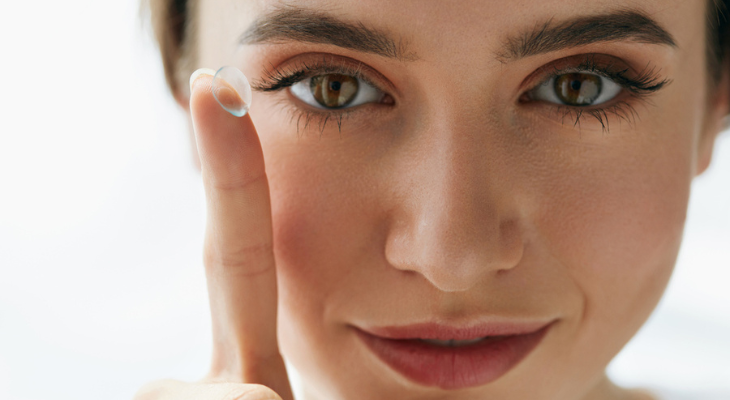
Woman holds contact lens on her finger.

The Benefits of Orthokeratology

Would you like to see clearly without wearing contact lenses or eyeglasses but don't want to have refractive eye surgery? Orthokeratology, commonly called ortho-k, may offer the perfect option for you.

What Is Orthokeratology?

Orthokeratology involves wearing special contact lenses at night that flatten your dome-shaped cornea. In addition to protecting your inner eye from debris, your cornea focuses light onto your retina. As light enters the eye, the cornea bends it to ensure that it's focused directly on the retina.

Ortho-k is most often used to treat myopia (nearsightedness). If you're nearsighted, light doesn't quite reach the retina inside your eyes, which makes everything you see in the distance look blurry. Flattening the cornea with orthokeratology corrects this issue. In some cases, Orthokeratology can also be used to treat astigmatism and hyperopia (farsightedness).

When you take out your gas-permeable lenses in the morning, your cornea will retain the shape of the lens, allowing you to see well without glasses or contact lenses. Initially, you'll wear a series of temporary contact lenses that will gradually flatten your corneas over several weeks. Once your optometrist is satisfied with your progress, you'll wear the same pair of contact lenses every night. You'll need to wear the contact lenses every night to maintain your results.

Orthokeratology Advantages

Ortho-k offers several benefits, including:

  • Excellent Vision. Ortho-k offers clear, crisp vision. The American Academy of Ophthalmology notes that it may take two weeks or longer to achieve sharp vision when you first start wearing the lenses at night.
  • A More Practical Solution. Forget about constantly cleaning your glasses or using rewetting drops to keep your contact lenses comfortable. When you opt for ortho-k, you won't have to keep an eyeglass case or contact lens supplies with you during the day.
  • More Comfortable Eyes. Do you constantly remove your contact lenses because a speck of dirt or dust has found its way under your contact lens? When you only wear lenses at night, you won't have to worry about contact lens discomfort in dusty or windy conditions.
  • Better Sports Experience. Imagine playing sports without worrying about damage to your glasses or the discomfort of a piece of debris under your contact lenses. Sports goggles and safety glasses also fit better when you don't have to wear them over a pair of eyeglasses.
  • Slower Progression of Myopia in Children and Teens. Myopia tends to get worse as your child gets older. If nearsightedness becomes severe, your child may be more likely to develop other eye problems, like cataracts, retinal detachment, and glaucoma. Orthokeratology could prevent myopia from progressing too quickly, according to several research studies. A literature review published in Ophthalmology noted that orthokeratology may help slow nearsightedness and is most effective if it's begun when children are 6 to 8 years old.
  • No More Worries About Your Glasses. You'll no longer need to worry about misplacing your eyeglasses, losing them, or forgetting them when you travel if you correct your vision with ortho-k. There's also no need for frequent eyeglass adjustments. Broken glasses are a definite possibility when you have active children. With orthokeratology, your kids can play without worrying that a stray ball or fall in the playground will damage their glasses.
  • Reversible Results. If you ever decide that you don't want to continue with orthokeratology, you'll simply stop wearing the lenses. Orthokeratology won't permanently change your eyes or cause scars or damage.

Would you like to find out if orthokeratology is the ideal solution for your vision issues? Contact our office to schedule an appointment.

Sources:

American Academy of Ophthalmology: What Is Orthokeratology, 4/23/2023

https://www.aao.org/eye-health/glasses-contacts/what-is-orthokeratology

Ophthalmology: Use of Orthokeratology for the Prevention of Myopic Progression in Children, 11/23/2018

https://www.aaojournal.org/article/S0161-6420(18)33073-2/fulltext

All About Vision: Ortho-K and Corneal Refractive Therapy: Overnight Contacts to Correct Myopia, 2/27/2019

https://www.allaboutvision.com/contacts/orthok.htm

Review of Myopia Management: Overnight Orthokeratology for Myopia: What Does the Evidence Say?, 6/3/2019

https://reviewofmm.com/overnight-orthokeratology-for-myopia-management-what-does-the-evidence-say/

  • Common Eye Conditions
    • Age-Related
    • Cognitive and Acquired
    • Vision Impairment
    • Injury & Irritation
    • Eye Lids
    • Changes in Appearance
  • Contact Lenses
  • Eye Diseases
  • Eyeglasses
    • Eyeglass Lenses
  • Eye Symptoms
  • How the Eyes Work
    • Basic Visual Skills
  • Pediatric Vision
  • Protecting Your Eyes
  • Visual Rehabilitation
  • Vision Problems
  • What is Vision Therapy
  • Vision Therapy Programs
  • We Can Help With
    • Cataracts
    • Corneal Disorders
      • Disorders
    • Glaucoma
    • Refractive Disorders
    • Adult Strabismus
    • Retinal Disorders
  • Newsletters
    • Glasses & Frames
    • Contacts
    • Tips for Healthy Eyes
    • Conditions That Affect Vision
    • Kid's Vision
    • Amazing, Interesting Eyes
    • Medical Perspectives

Contact Us

We look forward to hearing from you.

Error!

    • Our Services

      We strive to provide complete care for our patients/ learn more about all the services we provide.
      Learn More
    • Schedule Online

      We will do our best to accommodate your busy schedule. Schedule an appointment today!
    • Promotions

      CLICK HERE TO VIEW ALL

    Hours of Operation

    Our Regular Schedule /We close daily for lunch from 12:45pm to 2pm

    Monday:

    10:00am

    6:00pm

    Tuesday:

    9:00am

    5:00pm

    Wednesday:

    10:00am

    6:00pm

    Thursday:

    9:00am

    5:00pm

    Friday:

    9:00am

    5:00pm

    Saturday:

    Closed

    Closed

    Sunday:

    Closed

    Closed

    No Testimonials settings found. Please configure it.
    • March Newsletter: Top Signs You Need to See an Optometrist

      Do you need to make an appointment with the eye doctor? ...

      Read More
    • March Newsletter: How Dehydration Affects Your Eye Health

      Do you know how dehydration affects your eyes? ...

      Read More
    • February Newsletter: How to Prepare for an Eye Exam

      Are you ready for your eye exam? ...

      Read More
    • February Newsletter: What are Eye Floaters and When Should You Seek Treatment?

      Do you know when eye floaters need treatment? ...

      Read More
    • January Newsletter: Why You Should Not Ignore Dry Eye Symptoms

      Are your eyes dry? Find out why you shouldn't overlook your symptoms. ...

      Read More
    • January Newsletter: How the 20-20-20 Rule Can Reduce Eye Strain

      Struggling with eye strain? This simple rule can help. ...

      Read More
    • December Newsletter: The Best Contact Lenses for Dry Eyes

      Need to find more comfortable contacts for your dry eyes? Take a look at these options. ...

      Read More
    • December Newsletter: Daily Habits That Affect Your Vision

      Could your daily habits harm your eyesight? ...

      Read More
    • November Newsletter: Why It's Important to Have an Extra Pair of Eyeglasses or Contact Lenses

      Do you have an extra pair of eyeglasses or contact lenses? ...

      Read More
    • November Newsletter: The Advantages of Rimless Eyeglasses

      Are rimless eyeglasses right for you? ...

      Read More
    No Health Form settings found. Please configure it.
    • Copyright © 2026 MH Sub I, LLC dba iMatrix.
    • Admin Log In
    • Site Map