Would you like to switch to the accessible version of this site?

Go to accessible site Close modal window

Don't need the accessible version of this site?

Hide the accessibility button Close modal window
Accessibility View Close toolbar
Victoria Family Eyecare

6380 N. Navarro

Victoria, TX 77904 US

(361) 570-2010

Open mobile navigation
  • Home
  • About Us
    • Meet the Doctor
  • Patient Center
    • Online Forms
  • Eyecare Services
    • Contact Lens Exams
    • Eye & Vision Exams
  • Frame Selection
  • Products
    • Contacts
    • Frames
    • Latisse
  • Payment Options
  • Contact Us
  • Resources
  • Community Content
    • Common Eye Conditions
      • Age-Related
      • Cognitive and Acquired
      • Vision Impairment
      • Injury & Irritation
      • Eye Lids
      • Changes in Appearance
    • Contact Lenses
    • Eye Diseases
    • Eyeglasses
      • Eyeglass Lenses
    • Eye Symptoms
    • How the Eyes Work
      • Basic Visual Skills
    • Pediatric Vision
    • Protecting Your Eyes
    • Visual Rehabilitation
    • Vision Problems
    • What is Vision Therapy
    • Vision Therapy Programs
    • We Can Help With
      • Cataracts
      • Corneal Disorders
        • Disorders
      • Glaucoma
      • Refractive Disorders
      • Adult Strabismus
      • Retinal Disorders
    • Newsletters
      • Glasses & Frames
      • Contacts
      • Tips for Healthy Eyes
      • Conditions That Affect Vision
      • Kid's Vision
      • Amazing, Interesting Eyes
      • Medical Perspectives
  • Promotions
  • Sunbit
  • Neurolens
  • Home >
  • Articles >
  • Newsletters >
  • Glaucoma and You: The Importance of Eye Exams

Glaucoma and You: The Importance of Eye Exams

  • Created in Newsletters

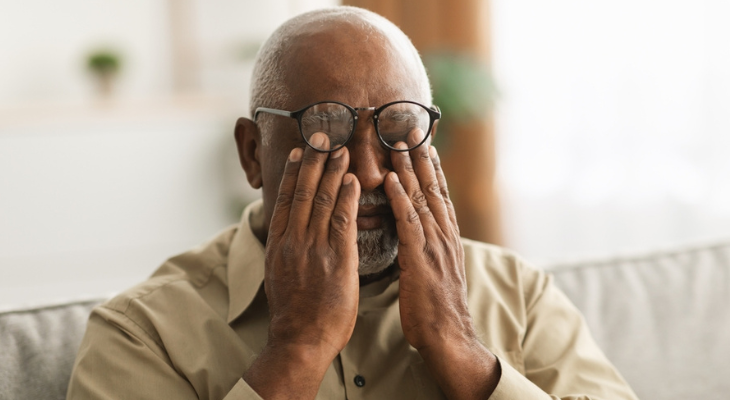
Old man rubbing his eyes

Glaucoma and You: The Importance of Eye Exams

Has it been a while since you've seen the optometrist? You may be putting your vision at risk if you haven't been scheduling regular eye exams. In addition to updating your contact lens or eyeglass prescription during your visit, your eye doctor also performs a glaucoma test. This simple test detects increased pressure in your eyes that could damage your vision.

What Is Glaucoma?

Pressure inside your eye helps your eyeball keep its round shape. If the pressure becomes too high, you may develop a condition called glaucoma. Primary open-angle glaucoma, the most common type of glaucoma, doesn't usually cause any symptoms at first. Unfortunately, the high pressure may soon begin to damage your optic nerve, even if you don't notice any changes in your vision.

The optic nerve sends electrical impulses from the retina at the back of your eye to your brain. Once the impulses reach the brain, they're turned into recognizable images. Damage to the optic nerve interrupts this flow of impulses to the brain. If this happens, you may experience permanent vision loss, which could be partial or full. Vision loss caused by glaucoma often affects your peripheral (side) vision first.

This type of glaucoma can happen to anyone, although it's more likely to occur as you get older. African American and Hispanic people have an increased risk of primary open-angle glaucoma, according to Bright Focus Foundation. Other risk factors include

  • A Family History of Glaucoma
  • A Cornea That's Thinner Than Normal
  • Myopia (Nearsightedness)
  • Diabetes
  • High Blood Pressure
  • An Eye Injury
  • Corticosteroid Use

Unlike primary open-angle glaucoma, acute angle-closure glaucoma causes immediate, noticeable symptoms, including severe pain, nausea, vomiting, blurry vision, redness in the eyes and halos around lights. If you have these symptoms, go to the emergency room immediately. If you don't seek treatment right away, you could lose your vision.

Acute angle-closure glaucoma happens when a drainage channel in your eye becomes blocked. The channels allow aqueous humor, the fluid inside your eye, to drain. Normally, as the fluid drains, it's replaced by new fluid. When the drainage channel is blocked, pressure inside your eye becomes dangerously high in a short amount of time.

You may be more likely to develop this form of glaucoma if the bottom of your iris is narrower than usual, your iris covers the drainage channel, or the clear lens inside your eye is located farther forward than normal

A Visit to the Eye Doctor Can Help You Protect Your Vision

During your appointment with your optometrist, you'll receive a glaucoma test. The test is usually performed by directing a puff of air at your eye to determine if the pressure inside your eye is higher than normal.

Your eye doctor will also dilate your pupils. Enlarging your pupils with special eye drops makes it easier to see the retina at the back of the eye and the optic nerve. Changes in the optic nerve, such as cupping at the head of the nerve, could mean that your eye pressure is too high. Your eye doctor may also perform a visual fields test to determine if you've lost any side vision.

Prompt Treatment of Glaucoma Is Essential

If you are diagnosed with glaucoma, your optometrist will recommend treatment to lower your pressure. The sooner you begin treatment, the less likely you'll suffer vision loss. Treatments for primary open-angle glaucoma include:

  • Prescription Eye Drops That Lower Pressure Inside Your Eye
  • Laser Procedures That Improve Drainage or Reduce the Amount of Fluid Produced
  • Filtration Surgery to Create a New Drainage Channel

If you have acute angle-closure glaucoma, drops will be used to try to decrease the pressure. You may also need laser or traditional surgery to make a small drainage opening in your iris or reposition your iris to allow better drainage.

Sources:

Bright Focus Foundation: Risk Factors of Primary Open-Angle Glaucoma, 08/20/2021

American Optometric Association: Glaucoma

National Eye Institute: Facts About Glaucoma, 04/21/2022

Medline Plus: Glaucoma Tests

  • Common Eye Conditions
    • Age-Related
    • Cognitive and Acquired
    • Vision Impairment
    • Injury & Irritation
    • Eye Lids
    • Changes in Appearance
  • Contact Lenses
  • Eye Diseases
  • Eyeglasses
    • Eyeglass Lenses
  • Eye Symptoms
  • How the Eyes Work
    • Basic Visual Skills
  • Pediatric Vision
  • Protecting Your Eyes
  • Visual Rehabilitation
  • Vision Problems
  • What is Vision Therapy
  • Vision Therapy Programs
  • We Can Help With
    • Cataracts
    • Corneal Disorders
      • Disorders
    • Glaucoma
    • Refractive Disorders
    • Adult Strabismus
    • Retinal Disorders
  • Newsletters
    • Glasses & Frames
    • Contacts
    • Tips for Healthy Eyes
    • Conditions That Affect Vision
    • Kid's Vision
    • Amazing, Interesting Eyes
    • Medical Perspectives

Contact Us

We look forward to hearing from you.

Error!

    • Our Services

      We strive to provide complete care for our patients/ learn more about all the services we provide.
      Learn More
    • Schedule Online

      We will do our best to accommodate your busy schedule. Schedule an appointment today!
    • Promotions

      CLICK HERE TO VIEW ALL

    Hours of Operation

    Our Regular Schedule /We close daily for lunch from 12:45pm to 2pm

    Monday:

    10:00am

    6:00pm

    Tuesday:

    9:00am

    5:00pm

    Wednesday:

    10:00am

    6:00pm

    Thursday:

    9:00am

    5:00pm

    Friday:

    9:00am

    5:00pm

    Saturday:

    Closed

    Closed

    Sunday:

    Closed

    Closed

    No Testimonials settings found. Please configure it.
    • March Newsletter: Top Signs You Need to See an Optometrist

      Do you need to make an appointment with the eye doctor? ...

      Read More
    • March Newsletter: How Dehydration Affects Your Eye Health

      Do you know how dehydration affects your eyes? ...

      Read More
    • February Newsletter: How to Prepare for an Eye Exam

      Are you ready for your eye exam? ...

      Read More
    • February Newsletter: What are Eye Floaters and When Should You Seek Treatment?

      Do you know when eye floaters need treatment? ...

      Read More
    • January Newsletter: Why You Should Not Ignore Dry Eye Symptoms

      Are your eyes dry? Find out why you shouldn't overlook your symptoms. ...

      Read More
    • January Newsletter: How the 20-20-20 Rule Can Reduce Eye Strain

      Struggling with eye strain? This simple rule can help. ...

      Read More
    • December Newsletter: The Best Contact Lenses for Dry Eyes

      Need to find more comfortable contacts for your dry eyes? Take a look at these options. ...

      Read More
    • December Newsletter: Daily Habits That Affect Your Vision

      Could your daily habits harm your eyesight? ...

      Read More
    • November Newsletter: Why It's Important to Have an Extra Pair of Eyeglasses or Contact Lenses

      Do you have an extra pair of eyeglasses or contact lenses? ...

      Read More
    • November Newsletter: The Advantages of Rimless Eyeglasses

      Are rimless eyeglasses right for you? ...

      Read More
    No Health Form settings found. Please configure it.
    • Copyright © 2026 MH Sub I, LLC dba iMatrix.
    • Admin Log In
    • Site Map