Would you like to switch to the accessible version of this site?

Go to accessible site Close modal window

Don't need the accessible version of this site?

Hide the accessibility button Close modal window
Accessibility View Close toolbar
Victoria Family Eyecare

6380 N. Navarro

Victoria, TX 77904 US

(361) 570-2010

Open mobile navigation
  • Home
  • About Us
    • Meet the Doctor
  • Patient Center
    • Online Forms
  • Eyecare Services
    • Contact Lens Exams
    • Eye & Vision Exams
  • Frame Selection
  • Products
    • Contacts
    • Frames
    • Latisse
  • Payment Options
  • Contact Us
  • Resources
  • Community Content
    • Common Eye Conditions
      • Age-Related
      • Cognitive and Acquired
      • Vision Impairment
      • Injury & Irritation
      • Eye Lids
      • Changes in Appearance
    • Contact Lenses
    • Eye Diseases
    • Eyeglasses
      • Eyeglass Lenses
    • Eye Symptoms
    • How the Eyes Work
      • Basic Visual Skills
    • Pediatric Vision
    • Protecting Your Eyes
    • Visual Rehabilitation
    • Vision Problems
    • What is Vision Therapy
    • Vision Therapy Programs
    • We Can Help With
      • Cataracts
      • Corneal Disorders
        • Disorders
      • Glaucoma
      • Refractive Disorders
      • Adult Strabismus
      • Retinal Disorders
    • Newsletters
      • Glasses & Frames
      • Contacts
      • Tips for Healthy Eyes
      • Conditions That Affect Vision
      • Kid's Vision
      • Amazing, Interesting Eyes
      • Medical Perspectives
  • Promotions
  • Sunbit
  • Neurolens
  • Home >
  • Articles >
  • Newsletters >
  • Good Eye Health Is Essential for Athletes

Good Eye Health Is Essential for Athletes

  • Created in Newsletters

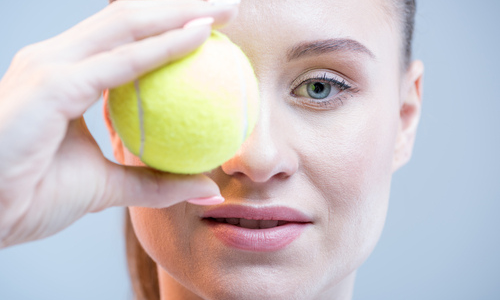
Woman with tennis ball covering eye

Eye Health for Athletes - Why Vision is Important in Sports

Eyesight is a crucial, yet often overlooked, aspect of sports ability. Without good vision, scoring points, hitting balls, and fending off opponents becomes much more difficult.

Why Good Vision Is Particularly Important for Athletes

It's difficult to determine which player has the ball or accurately judge your distance from the golf hole if everything in front of you is blurry. Although some athletes are lucky enough to have 20/20 vision, many find it difficult to see clearly due to common refractive errors like myopia (nearsightedness) or hyperopia (farsightedness.) In fact, more than 150 million Americans wear some type of corrective eyewear due to refractive errors, according to the American Academy of Ophthalmology.

Visual acuity, the ability to see objects and images sharply, isn't the only aspect of good vision. Good depth perception is needed to line up a shot accurately, while peripheral (side) vision is essential for spotting a member of the opposing team intent on stealing the ball from you.

Tracking, the ability to follow a moving object with your eyes, makes it possible to estimate where a ball will land or spot its path in the sky. Even subtle problems with eye alignment, eye teaming, focusing, tracking, or other visual skills can affect your sports performance.

Dry eye might also affect your vision, no matter what type of sport you play. The condition is more likely to be a problem during windy, sunny, or dusty days. Your risk of dry eye increases as you get older, but the condition can be a side effect of some prescription medications or caused by certain health conditions. When your eyes become too dry, you may experience blurry vision, sensitivity to light, discomfort, or a foreign body sensation.

Even if you don't have any vision problems, glare from the sun or lights may interfere with your ability to see well. Although glare can be an issue for anyone, it tends to affect athletes with light eyes more than those with dark eyes.

Caring for Your Vision

Taking a few of these steps will help you protect and enhance your vision:

  • Wear Eye Protection. Eye injuries can cause permanent or temporary vision loss. The injuries occur most frequently in basketball, baseball, water sports, and racquet sports, according to FamilyDoctor.com. Wearing shatterproof, polycarbonate goggles that completely cover your eyes is the easiest way to prevent an eye injury.
  • Schedule Yearly Visits with the Optometrist. Even minor changes in your vision can affect your sports performance. Unfortunately, you'll never know your prescription isn't strong enough or an alignment problem is responsible for your depth perception issues if you don't make time for a comprehensive eye examination.
  • Reduce Glare. Glare from lights or the sun is a common cause of vision complaints from athletes. Your optometrist can recommend tinted glasses or sunglasses that help reduce the effects of glare.
  • Consider Contact Lenses. Contact lenses may offer clearer vision than eyeglasses, plus the lenses never slip or fog over on cold days.
  • Take Advantage of the Latest Eyeglass Lens Options. Both polycarbonate and Trivex lenses are good choices if you want a lightweight, impact-resistant lens that's tough enough to wear while playing sports. Trivex lenses offer exceptional clarity and help reduce halos around lights.
  • Keep Your Eyes Moist. Artificial tears or eye drops will keep your eyes moist during games or practices. If over-the-counter drops aren't helpful, your optometrist may offer prescription eye drops or recommend adding tiny plugs to the drainage channels in your eyes. Wearing goggles or wraparound sunglasses may help prevent your eyes from drying out on sunny or windy days.
  • Try a Few Exercises. If you'd like to improve your tracking, focusing, or eye teaming abilities, your optometrist can recommend a few activities or games that can help you fine-tune your visual skills.
  • Don't Ignore Eye Injuries. Even seemingly minor eye injuries should be examined by your eye doctor. Call your optometrist or go to the emergency room immediately if you have severe pain, bleeding, discharge, vision loss, a cut on or in your eye, or something stuck on or in your eye. Prompt treatment can reduce the risk of vision damage.

Regular eye exams are a must if you're an athlete. Call our office to schedule your visit.

Sources:

American Academy of Ophthalmology: Eye Health Statistics

American Academy of Ophthalmology: Sports Eye Safety, 5/6/19

U.S. News & World Report: The Link Between Good Eyesight and Sports Performance, 5/29/18

Family Doctor: Eye Injuries in Sports

  • Common Eye Conditions
    • Age-Related
    • Cognitive and Acquired
    • Vision Impairment
    • Injury & Irritation
    • Eye Lids
    • Changes in Appearance
  • Contact Lenses
  • Eye Diseases
  • Eyeglasses
    • Eyeglass Lenses
  • Eye Symptoms
  • How the Eyes Work
    • Basic Visual Skills
  • Pediatric Vision
  • Protecting Your Eyes
  • Visual Rehabilitation
  • Vision Problems
  • What is Vision Therapy
  • Vision Therapy Programs
  • We Can Help With
    • Cataracts
    • Corneal Disorders
      • Disorders
    • Glaucoma
    • Refractive Disorders
    • Adult Strabismus
    • Retinal Disorders
  • Newsletters
    • Glasses & Frames
    • Contacts
    • Tips for Healthy Eyes
    • Conditions That Affect Vision
    • Kid's Vision
    • Amazing, Interesting Eyes
    • Medical Perspectives

Contact Us

We look forward to hearing from you.

Error!

    • Our Services

      We strive to provide complete care for our patients/ learn more about all the services we provide.
      Learn More
    • Schedule Online

      We will do our best to accommodate your busy schedule. Schedule an appointment today!
    • Promotions

      CLICK HERE TO VIEW ALL

    Hours of Operation

    Our Regular Schedule /We close daily for lunch from 12:45pm to 2pm

    Monday:

    10:00am

    6:00pm

    Tuesday:

    9:00am

    5:00pm

    Wednesday:

    10:00am

    6:00pm

    Thursday:

    9:00am

    5:00pm

    Friday:

    9:00am

    5:00pm

    Saturday:

    Closed

    Closed

    Sunday:

    Closed

    Closed

    No Testimonials settings found. Please configure it.
    • March Newsletter: Top Signs You Need to See an Optometrist

      Do you need to make an appointment with the eye doctor? ...

      Read More
    • March Newsletter: How Dehydration Affects Your Eye Health

      Do you know how dehydration affects your eyes? ...

      Read More
    • February Newsletter: How to Prepare for an Eye Exam

      Are you ready for your eye exam? ...

      Read More
    • February Newsletter: What are Eye Floaters and When Should You Seek Treatment?

      Do you know when eye floaters need treatment? ...

      Read More
    • January Newsletter: Why You Should Not Ignore Dry Eye Symptoms

      Are your eyes dry? Find out why you shouldn't overlook your symptoms. ...

      Read More
    • January Newsletter: How the 20-20-20 Rule Can Reduce Eye Strain

      Struggling with eye strain? This simple rule can help. ...

      Read More
    • December Newsletter: The Best Contact Lenses for Dry Eyes

      Need to find more comfortable contacts for your dry eyes? Take a look at these options. ...

      Read More
    • December Newsletter: Daily Habits That Affect Your Vision

      Could your daily habits harm your eyesight? ...

      Read More
    • November Newsletter: Why It's Important to Have an Extra Pair of Eyeglasses or Contact Lenses

      Do you have an extra pair of eyeglasses or contact lenses? ...

      Read More
    • November Newsletter: The Advantages of Rimless Eyeglasses

      Are rimless eyeglasses right for you? ...

      Read More
    No Health Form settings found. Please configure it.
    • Copyright © 2026 MH Sub I, LLC dba iMatrix.
    • Admin Log In
    • Site Map