Would you like to switch to the accessible version of this site?

Go to accessible site Close modal window

Don't need the accessible version of this site?

Hide the accessibility button Close modal window
Accessibility View Close toolbar
Victoria Family Eyecare

6380 N. Navarro

Victoria, TX 77904 US

(361) 570-2010

Open mobile navigation
  • Home
  • About Us
    • Meet the Doctor
  • Patient Center
    • Online Forms
  • Eyecare Services
    • Contact Lens Exams
    • Eye & Vision Exams
  • Frame Selection
  • Products
    • Contacts
    • Frames
    • Latisse
  • Payment Options
  • Contact Us
  • Resources
  • Community Content
    • Common Eye Conditions
      • Age-Related
      • Cognitive and Acquired
      • Vision Impairment
      • Injury & Irritation
      • Eye Lids
      • Changes in Appearance
    • Contact Lenses
    • Eye Diseases
    • Eyeglasses
      • Eyeglass Lenses
    • Eye Symptoms
    • How the Eyes Work
      • Basic Visual Skills
    • Pediatric Vision
    • Protecting Your Eyes
    • Visual Rehabilitation
    • Vision Problems
    • What is Vision Therapy
    • Vision Therapy Programs
    • We Can Help With
      • Cataracts
      • Corneal Disorders
        • Disorders
      • Glaucoma
      • Refractive Disorders
      • Adult Strabismus
      • Retinal Disorders
    • Newsletters
      • Glasses & Frames
      • Contacts
      • Tips for Healthy Eyes
      • Conditions That Affect Vision
      • Kid's Vision
      • Amazing, Interesting Eyes
      • Medical Perspectives
  • Promotions
  • Sunbit
  • Neurolens
  • Home >
  • Articles >
  • Pediatric Vision >
  • Crossed Eyes

Crossed Eyes

  • Created in Pediatric Vision

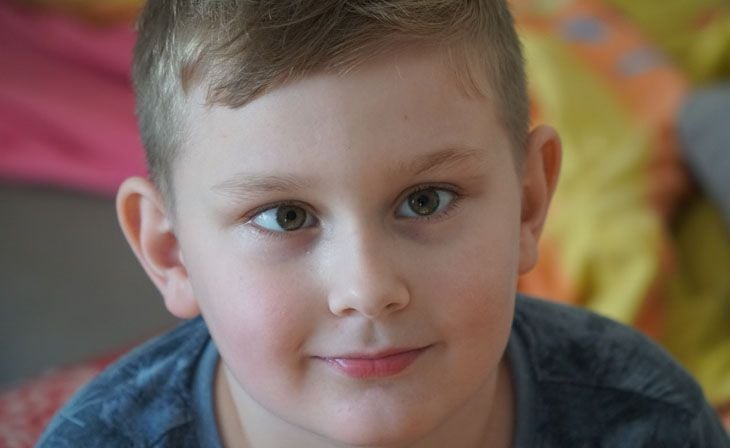
Boy with crossed eyes

Crossed eyes, also known as strabismus, refer to a condition in which both eyes do not look at the same place at the same time. Often times they both turn in, but may also turn out.

What Causes Crossed Eyes?

The six muscles attached to each eye, which control how it moves, receive signals from the brain. These signals direct the eye’s movements. In normal circumstances, the eyes work in an organized fashion so that both point in the same direction at the same time. With crossed eyes, however, the muscles around the eyes do not work together because some are weaker than others. This causes the eyes to turn inward or in the opposite direction of each other.

It is important to have proper eye alignment. Misalignment can cause:

  • Double vision
  • Poor depth perception
  • Poor vision in the turned eye
  • Confusion

When the eyes are askew, the brain receives mixed images from each eye. In the beginning, the person may suffer from double vision and misperception. Over time, the brain becomes trained to ignore the image it receives from the weaker eye. But, if left untreated, the person may permanently lose vision in the weaker eye.

Risk factors for crossed eyes include family history, a considerable amount of uncorrected farsightedness and medical conditions like stroke, head injury, Down syndrome and cerebral palsy.

Though crossed eyes can develop in older children and adults, it typically develops in infants and young children by the age of three. Though babies are commonly affected, some experience a condition called false strabismus or pseudostrabismus, in which their eyes may appear misaligned, but they in fact are aiming at the same direction. This appearance of crossed eyes can be due to having excess skin over the inner corner of the eyes, or a wide bridge of the nose. As the child'face grows, the appearance of crossed eyes diminishes.

Ways to Treat Crossed Eyes

If the child does truly have crossed eyes, it is vital that he or she get treated. While some believe that the condition can be outgrown, it cannot. Crossed eyes can worsen without treatment. If you are the parent of a child who is older than four months and notice that his or her eyes do not appear to be straight at all times, an examination is in order.

In order to diagnose crossed eyes, a comprehensive eye exam will be performed, and it will concentrate on how the eyes focus and move. This may consist of:

  • Visual acuity – reading letters on near and distance reading charts in order to measure and evaluate the degree to which vision is impacted
  • A review of the patient’s family history
  • Refraction – an instrument known as a phoropter is used to conclude the right lens power needed to rectify refractive errors like astigmatism, nearsightedness and farsightedness. During the test, a series of lenses are placed in front of the patient’s eyes while a handheld lighted instrument (retinoscope) gauges how they focus light.
  • Focusing and alignment testing to determine how well your eyes move, focus and work in unison.
  • An eye health examination to observe the internal and external structures of the eyes.

The information rendered from these tests will allow your optometrist to develop a treatment plan, which can involve prisms, vision therapy, eyeglasses or eye muscle surgery. If the condition is found and treated early, it can often be corrected with excellent outcomes.

  • Common Eye Conditions
    • Age-Related
    • Cognitive and Acquired
    • Vision Impairment
    • Injury & Irritation
    • Eye Lids
    • Changes in Appearance
  • Contact Lenses
  • Eye Diseases
  • Eyeglasses
    • Eyeglass Lenses
  • Eye Symptoms
  • How the Eyes Work
    • Basic Visual Skills
  • Pediatric Vision
  • Protecting Your Eyes
  • Visual Rehabilitation
  • Vision Problems
  • What is Vision Therapy
  • Vision Therapy Programs
  • We Can Help With
    • Cataracts
    • Corneal Disorders
      • Disorders
    • Glaucoma
    • Refractive Disorders
    • Adult Strabismus
    • Retinal Disorders
  • Newsletters
    • Glasses & Frames
    • Contacts
    • Tips for Healthy Eyes
    • Conditions That Affect Vision
    • Kid's Vision
    • Amazing, Interesting Eyes
    • Medical Perspectives

Contact Us

We look forward to hearing from you.

Error!

    • Our Services

      We strive to provide complete care for our patients/ learn more about all the services we provide.
      Learn More
    • Schedule Online

      We will do our best to accommodate your busy schedule. Schedule an appointment today!
    • Promotions

      CLICK HERE TO VIEW ALL

    Hours of Operation

    Our Regular Schedule /We close daily for lunch from 12:45pm to 2pm

    Monday:

    10:00am

    6:00pm

    Tuesday:

    9:00am

    5:00pm

    Wednesday:

    10:00am

    6:00pm

    Thursday:

    9:00am

    5:00pm

    Friday:

    9:00am

    5:00pm

    Saturday:

    Closed

    Closed

    Sunday:

    Closed

    Closed

    No Testimonials settings found. Please configure it.
    • March Newsletter: Top Signs You Need to See an Optometrist

      Do you need to make an appointment with the eye doctor? ...

      Read More
    • March Newsletter: How Dehydration Affects Your Eye Health

      Do you know how dehydration affects your eyes? ...

      Read More
    • February Newsletter: How to Prepare for an Eye Exam

      Are you ready for your eye exam? ...

      Read More
    • February Newsletter: What are Eye Floaters and When Should You Seek Treatment?

      Do you know when eye floaters need treatment? ...

      Read More
    • January Newsletter: Why You Should Not Ignore Dry Eye Symptoms

      Are your eyes dry? Find out why you shouldn't overlook your symptoms. ...

      Read More
    • January Newsletter: How the 20-20-20 Rule Can Reduce Eye Strain

      Struggling with eye strain? This simple rule can help. ...

      Read More
    • December Newsletter: The Best Contact Lenses for Dry Eyes

      Need to find more comfortable contacts for your dry eyes? Take a look at these options. ...

      Read More
    • December Newsletter: Daily Habits That Affect Your Vision

      Could your daily habits harm your eyesight? ...

      Read More
    • November Newsletter: Why It's Important to Have an Extra Pair of Eyeglasses or Contact Lenses

      Do you have an extra pair of eyeglasses or contact lenses? ...

      Read More
    • November Newsletter: The Advantages of Rimless Eyeglasses

      Are rimless eyeglasses right for you? ...

      Read More
    No Health Form settings found. Please configure it.
    • Copyright © 2026 MH Sub I, LLC dba iMatrix.
    • Admin Log In
    • Site Map