Would you like to switch to the accessible version of this site?

Go to accessible site Close modal window

Don't need the accessible version of this site?

Hide the accessibility button Close modal window
Accessibility View Close toolbar
Victoria Family Eyecare

6380 N. Navarro

Victoria, TX 77904 US

(361) 570-2010

Open mobile navigation
  • Home
  • About Us
    • Meet the Doctor
  • Patient Center
    • Online Forms
  • Eyecare Services
    • Contact Lens Exams
    • Eye & Vision Exams
  • Frame Selection
  • Products
    • Contacts
    • Frames
    • Latisse
  • Payment Options
  • Contact Us
  • Resources
  • Community Content
    • Common Eye Conditions
      • Age-Related
      • Cognitive and Acquired
      • Vision Impairment
      • Injury & Irritation
      • Eye Lids
      • Changes in Appearance
    • Contact Lenses
    • Eye Diseases
    • Eyeglasses
      • Eyeglass Lenses
    • Eye Symptoms
    • How the Eyes Work
      • Basic Visual Skills
    • Pediatric Vision
    • Protecting Your Eyes
    • Visual Rehabilitation
    • Vision Problems
    • What is Vision Therapy
    • Vision Therapy Programs
    • We Can Help With
      • Cataracts
      • Corneal Disorders
        • Disorders
      • Glaucoma
      • Refractive Disorders
      • Adult Strabismus
      • Retinal Disorders
    • Newsletters
      • Glasses & Frames
      • Contacts
      • Tips for Healthy Eyes
      • Conditions That Affect Vision
      • Kid's Vision
      • Amazing, Interesting Eyes
      • Medical Perspectives
  • Promotions
  • Sunbit
  • Neurolens
  • Home >
  • Articles >
  • Contact Lenses >
  • Bifocal Contacts

Bifocal Contacts

  • Created in Contact Lenses

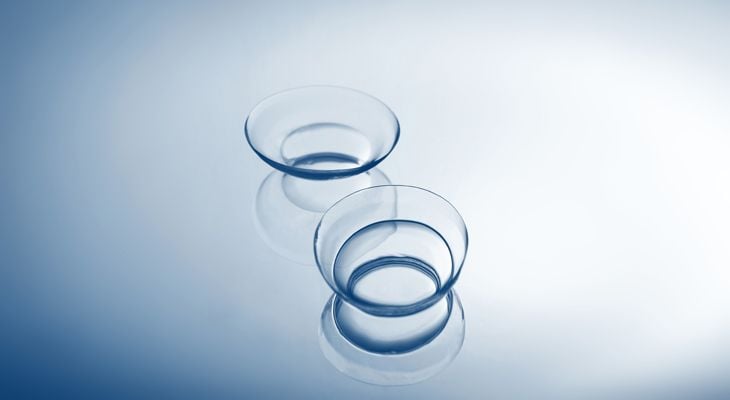
Bifocal contact lenses

Bifocal contact lenses are a type of contact lens that combine two different prescriptions in the same lens. One component corrects nearsightedness and the other prescription addresses farsightedness or farsightedness. Several types of bifocal contacts are available; your eye care provider can help you determine which option is best for you.

What Types of Bifocal Contacts Are Available?

  • The reading power is in the center of the lens, and the distance (far vision) is on the outside. Or, the distance could be in the middle with the reading on the outside.
  • The distance is on the top, and the reading power is on the bottom, similar to bifocal eyeglasses. These contact lenses are weighted at the bottom to keep the reading power on the bottom.
  • The reading and distance powers blend from the outside towards the center.

What Kind of Bifocal Contacts Should I Wear?

At your optometry clinic, you'll be able to explore your options fully. Generally, several factors influence the type of bifocal contacts that are right for you, including:

  • Your age
  • Your eyeglass prescription
  • The type of work you do
  • How you use your eyes, such as looking straight ahead or looking down when you read
  • Typical lighting conditions when you read
  • Your eye shape
  • Your pupil size

What Should I Expect During the Adjustment Period?

Some people adjust quickly while others need some time. You might notice that images jump when you switch between close-up and distance vision, or you might see a ghost image when you read. You might see a halo around lights, or your vision might change when the lens moves on your eyeball. If you experience any of these quirks, talk with your eye care provider. Sometimes, these effects are part of adapting to your new corrective lenses and will go away with time. However, in some cases, you might need to try a different type of lens.

If you're having trouble seeing clearly both up-close and at far distances then bifocal contact lenses offer a convenient alternative to bifocal eyeglasses. It may take longer to adjust to bifocal contacts than to glasses, but many find that it's a worthwhile investment.

  • Common Eye Conditions
    • Age-Related
    • Cognitive and Acquired
    • Vision Impairment
    • Injury & Irritation
    • Eye Lids
    • Changes in Appearance
  • Contact Lenses
  • Eye Diseases
  • Eyeglasses
    • Eyeglass Lenses
  • Eye Symptoms
  • How the Eyes Work
    • Basic Visual Skills
  • Pediatric Vision
  • Protecting Your Eyes
  • Visual Rehabilitation
  • Vision Problems
  • What is Vision Therapy
  • Vision Therapy Programs
  • We Can Help With
    • Cataracts
    • Corneal Disorders
      • Disorders
    • Glaucoma
    • Refractive Disorders
    • Adult Strabismus
    • Retinal Disorders
  • Newsletters
    • Glasses & Frames
    • Contacts
    • Tips for Healthy Eyes
    • Conditions That Affect Vision
    • Kid's Vision
    • Amazing, Interesting Eyes
    • Medical Perspectives

Contact Us

We look forward to hearing from you.

Error!

    • Our Services

      We strive to provide complete care for our patients/ learn more about all the services we provide.
      Learn More
    • Schedule Online

      We will do our best to accommodate your busy schedule. Schedule an appointment today!
    • Promotions

      CLICK HERE TO VIEW ALL

    Hours of Operation

    Our Regular Schedule /We close daily for lunch from 12:45pm to 2pm

    Monday:

    10:00am

    6:00pm

    Tuesday:

    9:00am

    5:00pm

    Wednesday:

    10:00am

    6:00pm

    Thursday:

    9:00am

    5:00pm

    Friday:

    9:00am

    5:00pm

    Saturday:

    Closed

    Closed

    Sunday:

    Closed

    Closed

    No Testimonials settings found. Please configure it.
    • March Newsletter: Top Signs You Need to See an Optometrist

      Do you need to make an appointment with the eye doctor? ...

      Read More
    • March Newsletter: How Dehydration Affects Your Eye Health

      Do you know how dehydration affects your eyes? ...

      Read More
    • February Newsletter: How to Prepare for an Eye Exam

      Are you ready for your eye exam? ...

      Read More
    • February Newsletter: What are Eye Floaters and When Should You Seek Treatment?

      Do you know when eye floaters need treatment? ...

      Read More
    • January Newsletter: Why You Should Not Ignore Dry Eye Symptoms

      Are your eyes dry? Find out why you shouldn't overlook your symptoms. ...

      Read More
    • January Newsletter: How the 20-20-20 Rule Can Reduce Eye Strain

      Struggling with eye strain? This simple rule can help. ...

      Read More
    • December Newsletter: The Best Contact Lenses for Dry Eyes

      Need to find more comfortable contacts for your dry eyes? Take a look at these options. ...

      Read More
    • December Newsletter: Daily Habits That Affect Your Vision

      Could your daily habits harm your eyesight? ...

      Read More
    • November Newsletter: Why It's Important to Have an Extra Pair of Eyeglasses or Contact Lenses

      Do you have an extra pair of eyeglasses or contact lenses? ...

      Read More
    • November Newsletter: The Advantages of Rimless Eyeglasses

      Are rimless eyeglasses right for you? ...

      Read More
    No Health Form settings found. Please configure it.
    • Copyright © 2026 MH Sub I, LLC dba iMatrix.
    • Admin Log In
    • Site Map